Gulab Jamun Recipe: Soft Jamuns from a Gits Mix
A gulab jamun recipe using Gits mix: soft dough, slow frying, warm cardamom syrup. Plus the milk powder route if you want to make them from scratch.
Every birthday, puja and Diwali table back home had a bowl of gulab jamun on it, usually still warm and usually the first thing to go. There's no halwai around the corner here, so most of us make them ourselves, and a packet of Gits Gulab Jamun Mix is the easiest way to get soft, syrup-soaked jamuns without hunting for khoya. Whether this gulab jamun recipe works comes down mostly to frying temperature, so that's where most of the notes go.
Ingredients
For the jamuns
- 1 packet (200g) Gits Gulab Jamun Mix
- Water, about 90–100 ml, added a little at a time
- Ghee or neutral oil for deep frying, plus 1 tsp ghee for greasing your palms
For the syrup
- 400g sugar (about 2 cups)
- 500 ml water
- 4–5 green cardamom pods, lightly crushed
- A few drops of rose water or a pinch of saffron (optional)
Method
- Make the syrup first. Put the sugar, water and cardamom in a wide pan on medium heat on your electric or induction hob. Stir until the sugar dissolves, then simmer for 5 to 7 minutes. It should feel slightly sticky between two fingers but not pull into threads. Add rose water or saffron if you're using it, then turn the heat to its lowest setting to keep the syrup warm.
- Make the dough. Tip the mix into a bowl and add water a spoonful at a time, bringing it together gently with your fingertips. You want a soft, slightly sticky dough. Don't knead it hard, because overworked dough gives you dense, rubbery jamuns. Cover and rest for 5 minutes.
- Shape. Grease your palms with a little ghee. Roll small balls, a bit bigger than a marble, and keep rolling until the surface is completely smooth. Any crack on the outside will split open in the hot fat. You should get roughly 20-30.
- Heat the fat low. Heat ghee or oil in a heavy kadai or deep pan on low to medium-low. Drop in a pinch of dough. It should rise slowly with small bubbles, not sizzle hard. Induction heats up fast, so start low and adjust.
- Fry slowly. Fry a few at a time, gently swirling the fat around them instead of poking the balls. They should take 5 to 7 minutes to turn an even deep brown. This is the tricky step. If they brown in two minutes, the fat is too hot and the centres will stay raw and hard.
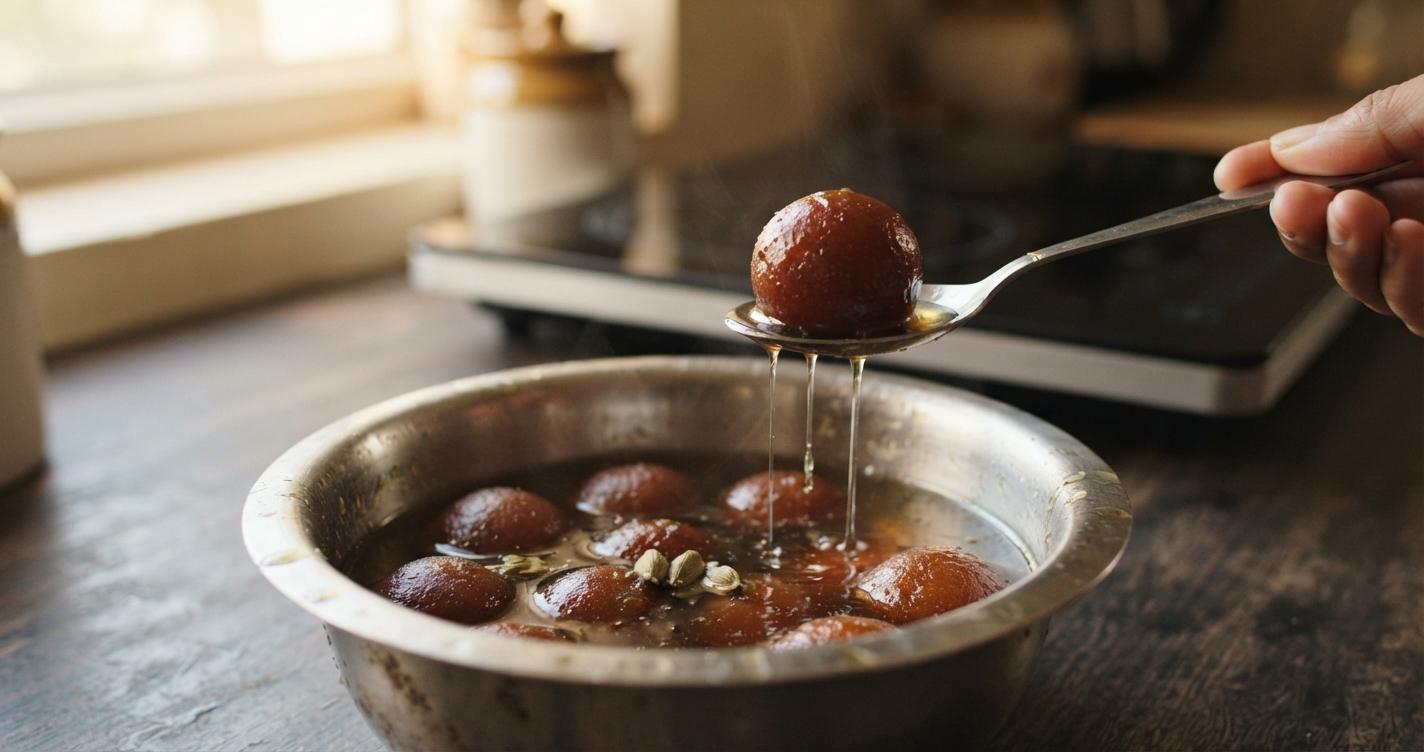
- Into the syrup. Lift them out, let them drain for 30 seconds, and drop them into the warm syrup. It should be warm, not boiling.
- Soak. Leave them for at least 2 hours. They swell and soften as they soak up the syrup. Serve warm or at room temperature.
Notes
- Warm syrup, warm jamuns. Cold syrup won't soak in. Boiling syrup can make them go mushy or split.
- Hard in the middle? The fat was too hot, or the dough was kneaded too much. Go lower and slower with the next batch.
- Storage. Keep them in their syrup, covered, in the fridge for 3 to 4 days. Warm them for a few seconds in the microwave before serving.
- Serving. Warm gulab jamun with a scoop of vanilla ice cream isn't traditional, but it's very good.
Gulab Jamun from Scratch: The Milk Powder Route
The traditional dough is made with khoya (mawa), which is hard to find fresh in Germany. Full-cream milk powder gets you close. Mix about 1 cup of NIDO full-cream milk powder, 2–3 tbsp maida (plain flour), a small pinch of baking soda and 1 tbsp ghee, then add milk a spoonful at a time until you have a soft dough. Shape, fry and soak exactly as above. It's fussier than the mix because the dough dries out quickly, so keep it covered while you roll.
Try These Products
- Gits Gulab Jamun Mix 200g: the base of this recipe
- Dairy Valley Ghee 277g: for frying and for greasing your palms
- TRS Green Cardamom 50g: for the syrup
- More in sweets and desserts
All on aahaar.de, delivered across Germany.